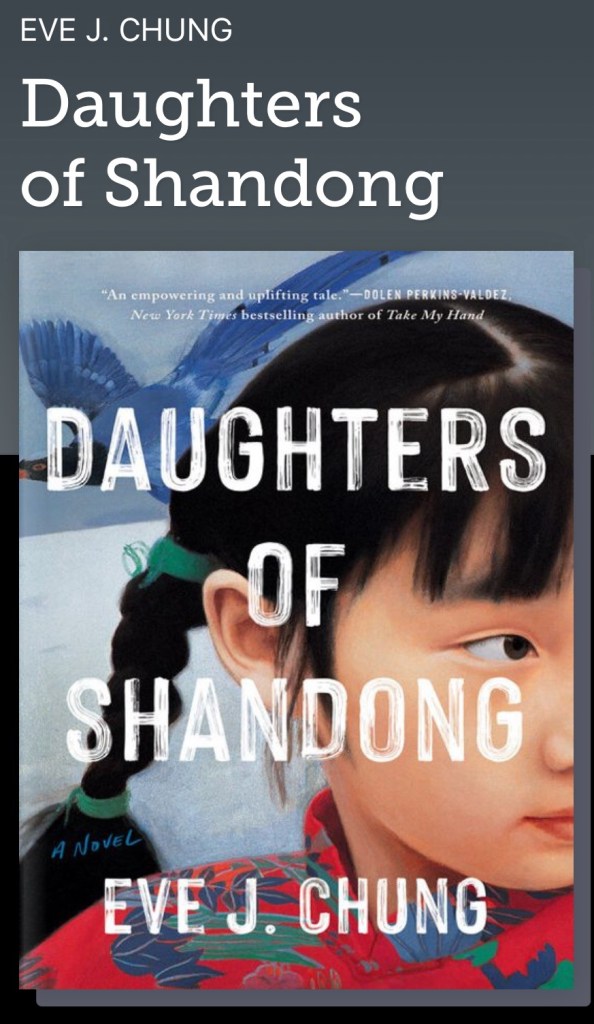
Summary: The story of a mother and her daughters who are abandoned by their family to flee the Cultural Revolution. Details their escape and fight for survival from rural Shandong, to Qingdao, Hong Kong, and finally Taiwan. Highlights the impact of Confucian patriarchy on Chinese family dynamics and culture, particularly its impact on women.
Personal Takeaways:
- Wives’ positions within families were only secured by their ability to bear sons; girls were viewed as useless mouths to feed and future debt to other families since they would one day leave the house and the best path for them was to marry well
- Sons were valued for their future ability to provide for their families and because only they would be able to worship their families ancestors
- Tang cousins share the same last name and treat one another as siblings since they would have the same family tomb; marriage with Tang cousins would be considered incestuous
- Higher education (high school and above) was traditionally reserved only for boys if the family couldn’t afford sending girls, since opportunities for university education was maximized for boys to be able to provide for their future family
- Only 大姑姑 went to university at NTU and studied sociology and 小姑姑 went to nurse school.
Personal Relevance:
- Confirmed that only my parents are really responsible for worshipping the Yeh family ancestors because only my dad is a “Yeh”. This is a huge stronghold that seems like would be very difficult to overcome when thinking about my dad converting to Christianity.
- Part of the significance of Jack’s grandparents forcing him to be a Cao may have meant that he was to provide for the Cao family rather than for the Zhang family
- I am thankful to be raised in my current generation, apart from patriarchal influences and expectations, and to have been afforded the same opportunities as my brother, even if he is a “Yeh” and I’m not
- It is significant that my mom was able to go to top universities since it would have been less common to be able to afford sending girls
- “Sometimes, success is something that happens over the course of generations, something that is built upon life after life, each one opening a path so that those coming after can walk easier, farther” – Really interesting quote and very true, although I wonder if it’s so true for my brother and I haha because it seems like we haven’t necessarily walked farther, though it’s definitely been easier.
- Makes sense why education is viewed so highly in Taiwanese/Asian culture since it is directly related to success and opportunities.
- Makes sense why people who have experienced hunger and trauma want to horde or go to the extremes of saving up for a rainy day, or do stuff like fatten kids up just in case something bad happens again.
- This book uses the term “denunciation rallies” instead of “struggle meetings,” which feels much more apt. Didn’t realize how violent they could be, especially when conducting land reform.
- It was interesting how the book also portrayed the kindness and humanity of the cadres towards fellow peasants and workers in juxtaposition with their hatred and abuse towards the privileged.
Follow Up:
- I wonder if my brother is aware of the cultural significance or obligations of being the only Yeh boy
- I wonder if Jack’s mom’s parents practiced ancestor worship and if they believed that only Cao males could worship the Cao family ancestors
- I remember Jack’s dad’s older brother is estranged from the family. I wonder how that impacted Jack’s dad in terms of familial obligation to provide for his own parents, if in a way he was essentially the oldest boy.
- I wonder if Jack’s maternal grandma was ashamed or traumatized by her inability to bear sons and whether that contributed to the harshness with which they treated Jack’s dad when wanting to marry Jack’s mom. Why didn’t they force Jack’s aunt’s husband to also give Xiao Mei the Cao last name?
 Always Learning